Search
Eugenio Dittborn
Since 1984, Chilean artist Eugenio Dittborn has been making works that he calls Airmail Paintings. They are constructed collages made of cheap, lightweight materials: photocopied images and text, culled from a wide variety of sources, sewn onto clothes-lining fabric, sometimes with the addition of printed or painted marks and messages. The large panels are then folded and packed into specially made envelopes and sent off on their travels...
These itinerant artworks collect meanings like souvenirs, as they journey from place to place, across borders, over time. Made, in part, in response to Santiago's place at the periphery of the international art scene and partly to circumvent the oppressive and regimented structures of Chile's military government, (as well as to reflect previous periods of colonisation and repression) these mobile visual messages are free to go anywhere and initiate an evolving dialogue with their global audience.
The work Dittborn makes is political, in form and intention, but in a persuasive rather than a dogmatic way. He uses images collected from various historical sources but usually with reference to the various powers (from the Spanish Conquistadors to the Pinochet regime) who have sought to control the people of South America and their personal histories. By removing them from their original context, rescuing them from obscurity he reveals those mechanisms of repression and control. He has described his Airmail Paintings as "a way of salvaging my previous work, which was threatened, like every other cultural production in Chile over these years, with oblivion."
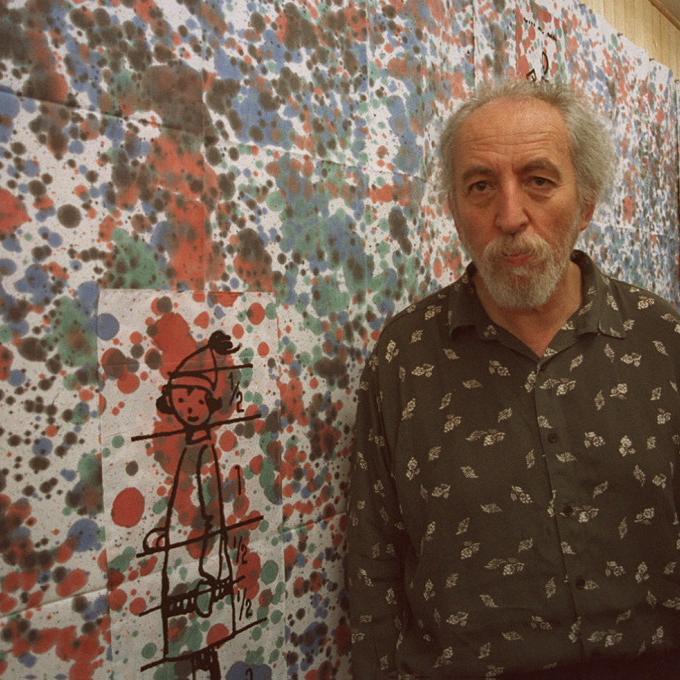
Eugenio Dittborn
Biography
Since 1984, Chilean artist Eugenio Dittborn has been making works that he calls Airmail Paintings. They are constructed collages made of cheap, lightweight materials: photocopied images and text, culled from a wide variety of sources, sewn onto clothes-lining fabric, sometimes with the addition of printed or painted marks and messages. The large panels are then folded and packed into specially made envelopes and sent off on their travels...
These itinerant artworks collect meanings like souvenirs, as they journey from place to place, across borders, over time. Made, in part, in response to Santiago's place at the periphery of the international art scene and partly to circumvent the oppressive and regimented structures of Chile's military government, (as well as to reflect previous periods of colonisation and repression) these mobile visual messages are free to go anywhere and initiate an evolving dialogue with their global audience.
The work Dittborn makes is political, in form and intention, but in a persuasive rather than a dogmatic way. He uses images collected from various historical sources but usually with reference to the various powers (from the Spanish Conquistadors to the Pinochet regime) who have sought to control the people of South America and their personal histories. By removing them from their original context, rescuing them from obscurity he reveals those mechanisms of repression and control. He has described his Airmail Paintings as "a way of salvaging my previous work, which was threatened, like every other cultural production in Chile over these years, with oblivion."
